
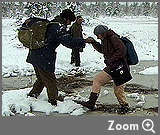

Trudging through swamp and forest to the Nenets cabin
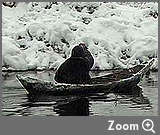
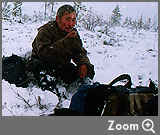
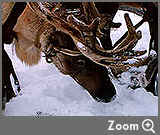
>Visit the tundra Nenets during their annual spring festival.

Day 1: Into the Great Beyond
Numto, Siberia -- At times it's almost impossible to put one foot in front of the other. After seven years in Russia I've never heard the word "bolota," but right now I am learning exactly what it means in a very graphic way: swamp. Part of the problem is that an early, unexpected snowstorm has caused an icy crust to form atop the oozy waters I'm slogging through. Sometimes I sink so far down into the muck that it's difficult to pull my foot out.
I am trekking roughly 12 to 15 kilometers through swamp and forest with my companions -- ethnographers Alyosha and Marina Zenko from the central Siberian city of Tyumen. Fortunately I am wearing a pair of "sapagee," the same thigh-high rubber boots which allow fishermen to stand in swift-flowing rivers and still keep their feet dry.
Why are we trudging through this inhospitable terrain? To reach the remote homestead of the Siberian reindeer herders, who call this area northeast of the Ural Mountains home. Leading the way is Ilya Pyak, a 42-year-old native man whose people are called "forest Nenets" to distinguish them from their ethnic cousins who live farther north on the Arctic tundra.
A deceptively simple life
Ilya is leading us deep into the bush to get a taste for a lifestyle that is far removed from what we (and most of the world) are used to -- a life that is deceptively simple. Through this most modern of media, I'll take you back hundreds of years.
Living with reindeer is not all Santa and elves. The Nenets live right off the land, even in this day and age. Theirs is an economy of "natural" resources in every sense, subsisting as they do on the fish they catch, on the wild animals they hunt and trap, on the berries they collect and on the reindeer they raise. Money is only needed to buy a few supplements such as flour, salt, sugar and tea.
The Nenets are one of the largest of about 15 different reindeer-herding cultures scattered across the Russian Arctic. These people are still living lives very similar to those their ancestors lived as much as 500 years ago. During the Soviet era, all native peoples, many who barely knew the outside world existed, were forced into collective farms. Today, although all native children are educated outside the home, many have returned to their centuries-old traditions.
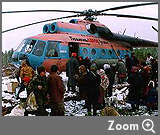
We met Ilya under the ear-splitting swirl of a helicopter rotor upon landing in Numto, a scruffy settlement of about 15 unpainted houses in this northern Russian wilderness. He was among dozens of people who had come from all over the region to meet the chopper, which sets down just once a week on a small wooden platform after an hour's flight from the nearest major town -- Beloyarsky.
For a few minutes while the helicopter stands on the pad, the scene is frenetic. This modest "airport" becomes a makeshift market where people try to sell fish, meat and berries to the pilots for resale in the outside world.
Cut off from the modern world
Now Ilya is trudging along in front of us, wearing a coverall summer parka made from heavy felt and carrying a canvas backpack. He had told us the trek would take about three hours, which sounded reasonable enough. In mid-afternoon we stop to light a small campfire to dry out our socks and boots.
"Skolka per-zent sechas? (What percent have we gone?)" I ask Ilya wearily.
"About 40," he replies with a wry smile. This isn't what I want to hear; after all, we'd already been at it for well over three hours. And we haven't even gone halfway.
"Three hours if Ilya was alone, but he isn't," says Alyosha with a smile as he holds his socks over the fire on a stick to dry. A professor at a regional Siberian university, he and his wife, Marina, have been on dozens of such trips into the bush to meet with native peoples over the years. They are used to such time estimates. I am only glad we set out in the morning.
The landscape varies as we progress: small hillocks with clumps of vegetation give way to patches of evergreen forest, which in turn give way to the open swamp. Fortunately we skirt the small lakes of brackish water that are characteristic of this rough terrain. On more than one occasion I realize how lost I would be if my companions were to disappear in the swirl of snow. There is no trail. Ilya just knows the way.
More than a few times I also wonder: Just what would motivate someone to live way out here in this remote place? To be cut off from the "world" as most people know it? Yet here in Russia, the Nenets and Khanty are just two of dozens of native groups who choose to live in the most remote corners of this continent-sized land that stretches over 11 time zones -- almost half the planet.
While the cultures and languages vary widely among the reindeer-herding peoples, the common thread connecting them is that they fashion their lives from the resources of this harsh environment. I've made this journey to the back of beyond to learn what it is like to live such a life.
 Main Migration Map WebLinks DISCOVERY.COM |
|
Pictures and video: Bill Gasperini | Copyright © 1998 Discovery Communications Inc. |